Column I gives a list of possible set of parameters measured in some experiments. The variations of the parameters in the form of graphs are shown in Column II. Match the set of parameters given in Column I with the graphs given in Column II.
Column I | Column II | ||
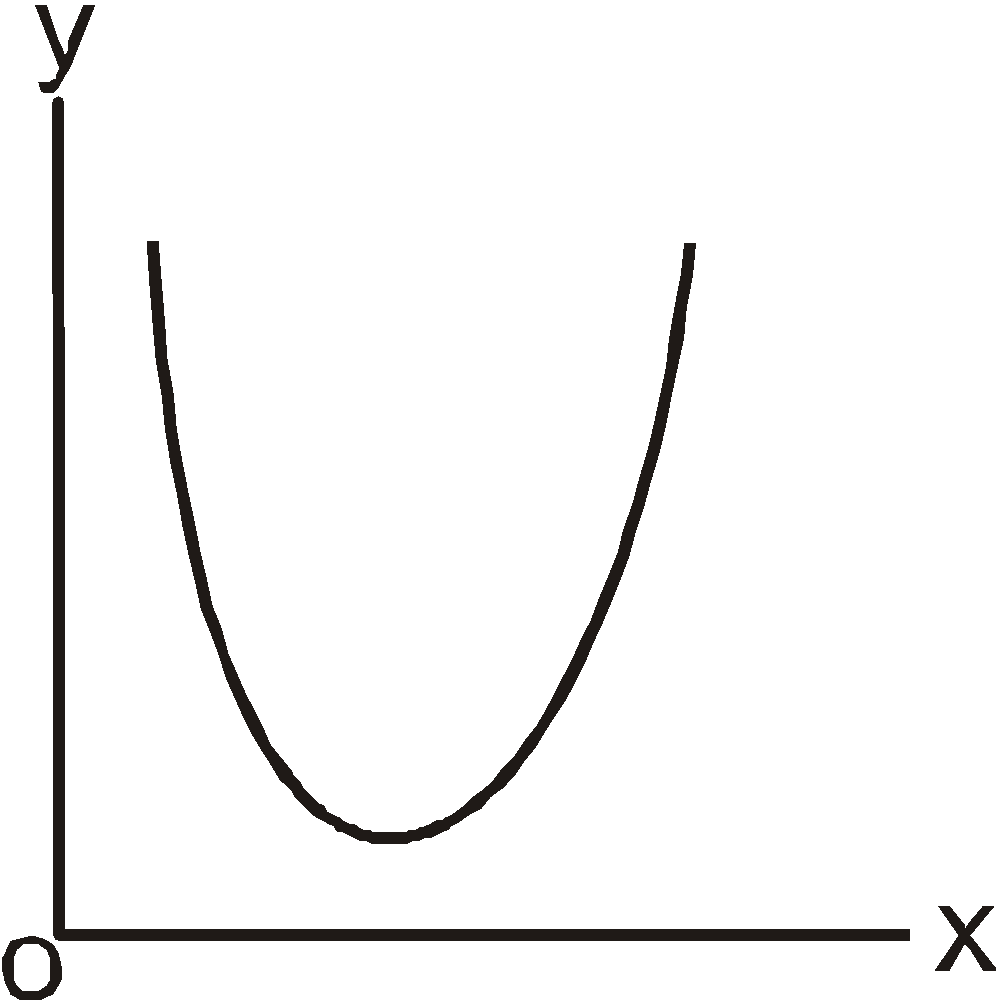
(a) | Potential energy of a simple pendulum (y–axis) as a function of displacement (x–axis) | (p) | |
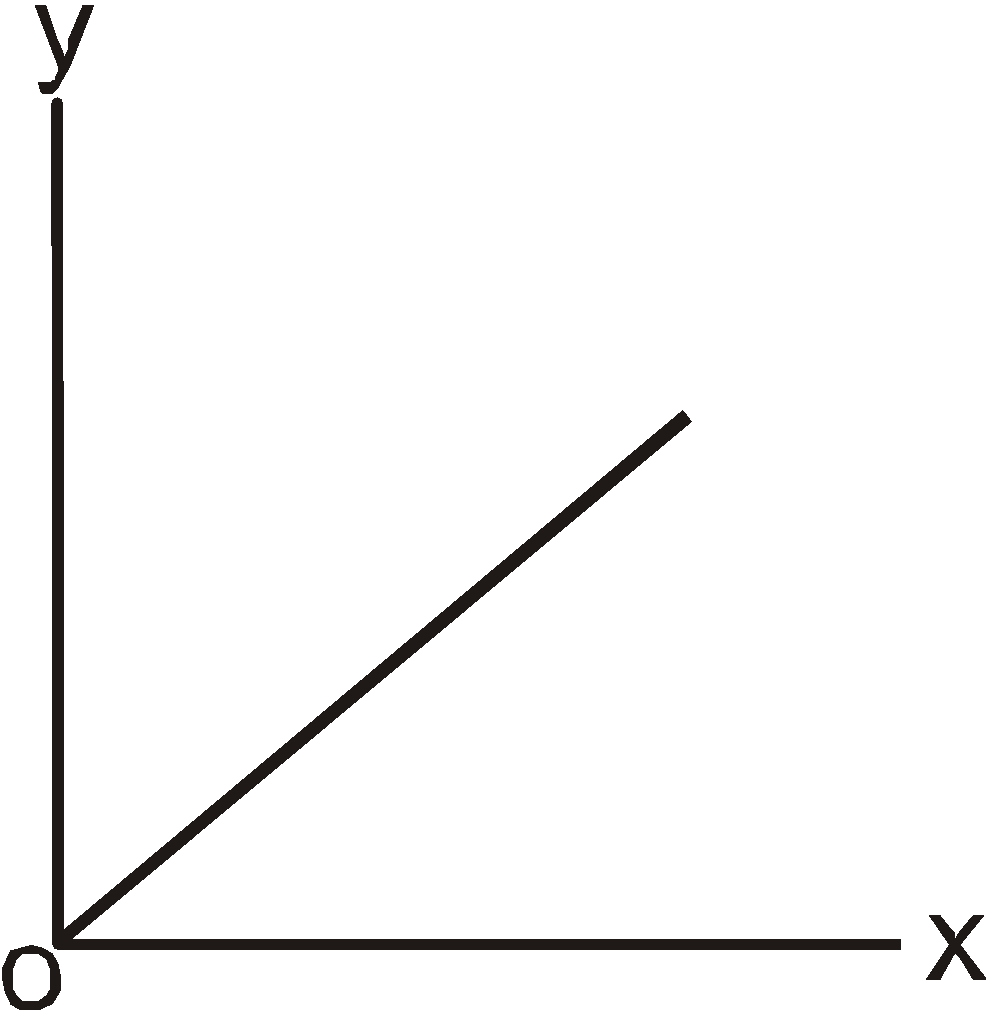
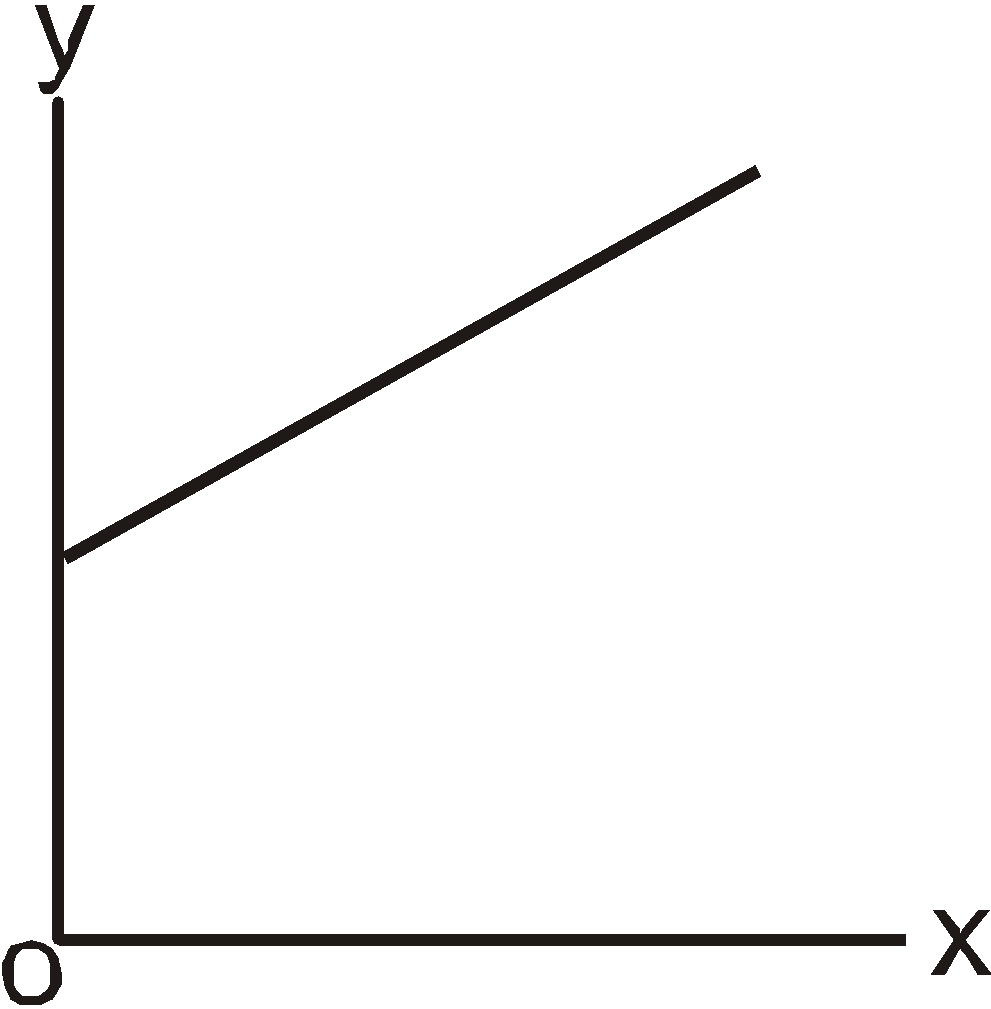
(b) | Displacement (y–axis) as a function of time (x–axis) for a one dimensional motion at zero or constant acceleration when the body is moving along the positive x– direction. | (q) | |
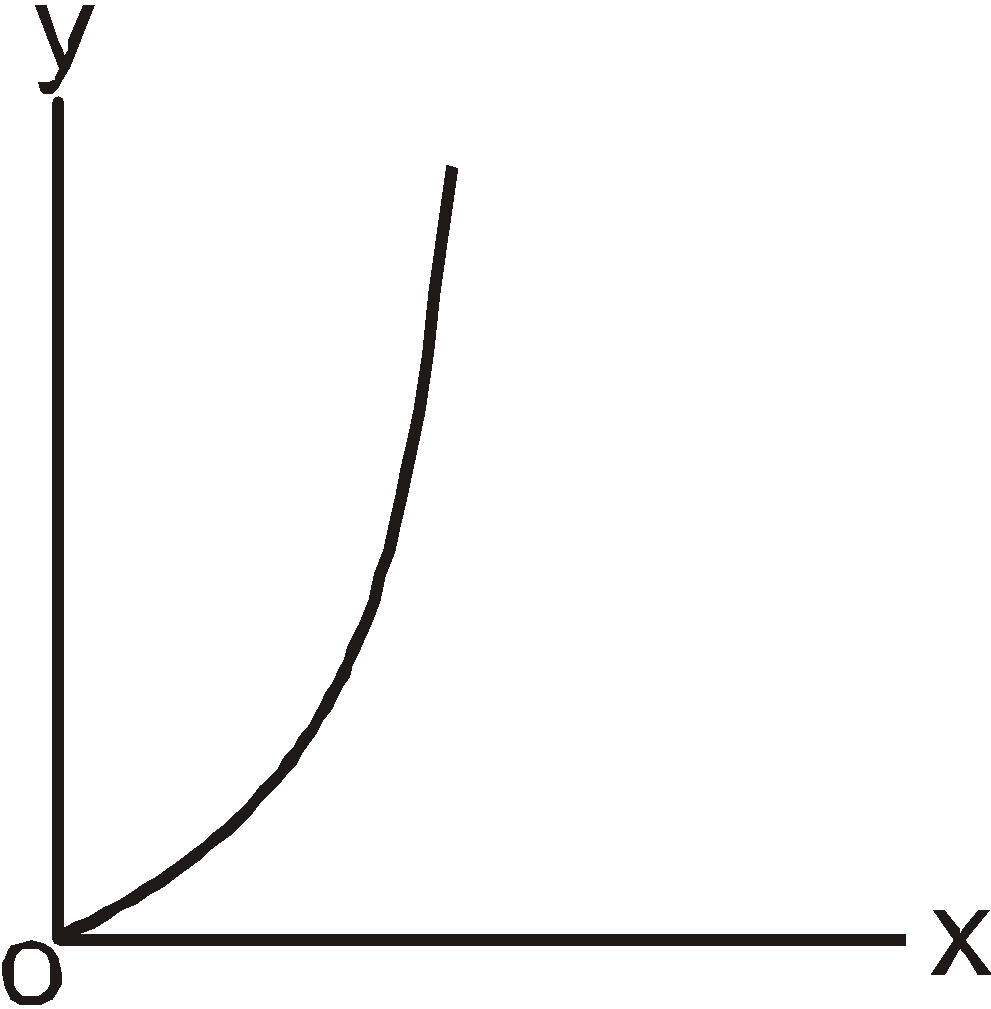
(c) | Range of a projectile (y–axis) as a function of its velocity (x–axis) when projected at a fixed angle. | (r) | |
(d) | The square of the time period (y–axis) of a simple pendulum as a function of its length (x–axis). | (s) |
Text Solution
Verified by Experts→ (p); → (q, s); → (s); → (q)
Sol. From nature of SHM, the graph of potential energy as function of displacement will be parabolic graph as given in option p. Hence → (p)
a = 0 or a = constant. (as per given condition)
V > 0 moving along positive x-axis
y – displacement
y = ut ±  at 2 for a = constant
y = vt for a = 0
These two conditions are satisfied by (q) and (s). → (q, s)
(p) Is rejected because at t = 0 the displacement is not zero and velocity has negative values.
R =  and R ∝ u 2
for a fixed angle of projection. at u = 0, R = 0
→ (s)
T = 
⇒ T 2 = 
⇒ y = 
→ (q)
Prepare Smarter with CGP Edu
Get practice questions, solutions, and test series in one place.
Write a Review
Share your experience with this question and solution.
Commentary
Send your comment, doubt, correction, or feedback to admin.
Similar Questions
Explore conceptually related problems